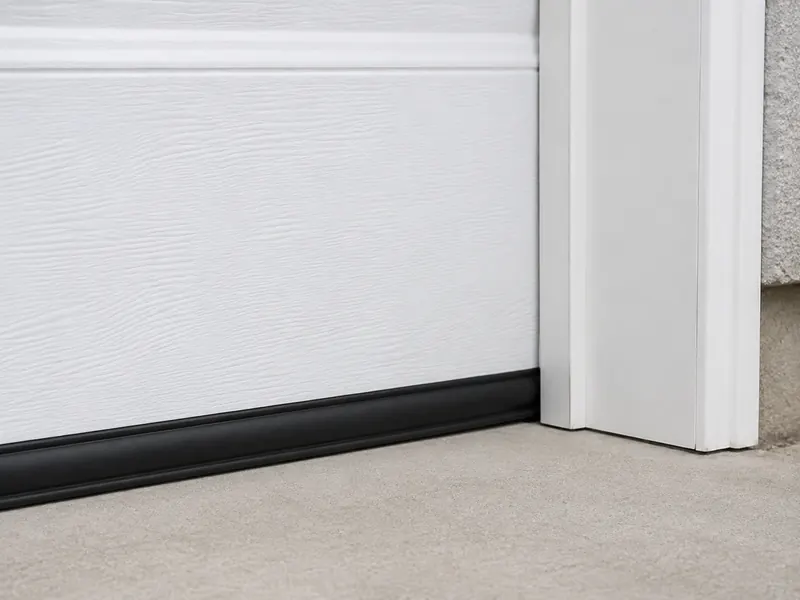
Locate the gap before choosing a product
The bottom seal meets the floor, while perimeter seals work around the sides and top of the opening. A gap between door sections is a separate condition. Describe where the problem occurs and whether the door otherwise closes evenly. Do not assume every opening can be corrected by adding a thicker bottom seal.
Photographs of the closed door from a safe position can help explain the pattern. Note whether a seal is torn, brittle, detached, or missing. If the door is crooked, stops short, or reverses before closing, start with a mechanical or opener assessment. Weather-seal work should not conceal a fault that prevents proper door movement.
Compatibility and attachment affect the scope
Bottom seals use different shapes and attachment systems. The replacement should suit the existing retainer and door model. A damaged retainer may need separate attention. Perimeter products also need an appropriate fit and attachment to the opening.
Ask which seals are included, whether retainers or trim require replacement, and how corners and joints will be addressed. Product choice should account for the actual opening and manufacturer guidance. A contractor can also explain whether the proposal involves only the door seals or another measure at the floor. Those should be separate line items because they solve different problems and involve different surfaces.
- Identify bottom, side, and top work separately.
- Ask whether the existing attachment channels remain usable.
- Confirm how the door's operation will be checked after fitting.
Be realistic about water and thermal performance
A new seal is not a guarantee against water entry. Floor slope, drainage, damaged surfaces, and conditions outside the garage may contribute. If water flows toward the opening or pools inside, describe that pattern and ask whether a door contractor's scope addresses it.
Likewise, replacing seals does not establish a particular energy saving or make an uninsulated door equivalent to an insulated assembly. It is useful to address visible gaps, but broader comfort concerns may involve the door construction and the rest of the garage. Ask for the likely role and limits of the proposed work without relying on a promised temperature change.
Arrange maintenance around the door's condition
For a Burlington service inquiry, mention the door material, approximate size, and any existing model information. Confirm the charge for assessing fit and whether material, labor, and removal of old seals are included. If a special profile is required, ask how that affects the appointment and final scope.
Do not force a door whose bottom seal is stuck to the ground, and do not change opener travel or force settings simply to compress a new seal. Follow the product's care guidance after replacement. If a persistent gap remains, have the underlying door alignment or floor condition assessed rather than repeatedly adding material.
Sources: Clopay service guide and weather seal considerations